Hyde Park Oasis
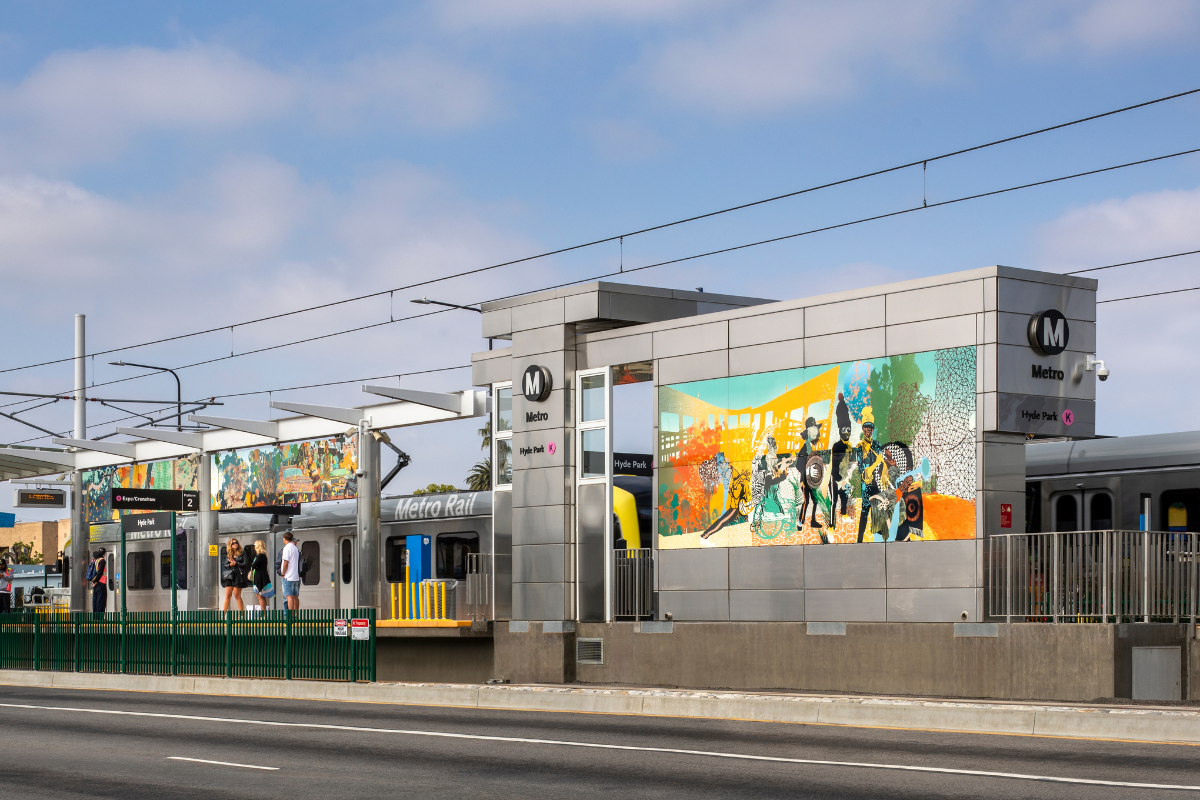
Carlson Hatton’s densely layered, rhythmic murals capture the soundtrack of Hyde Park and its surrounding areas.
Carlson Hatton’s densely layered, rhythmic murals capture the soundtrack of Hyde Park and its surrounding areas.
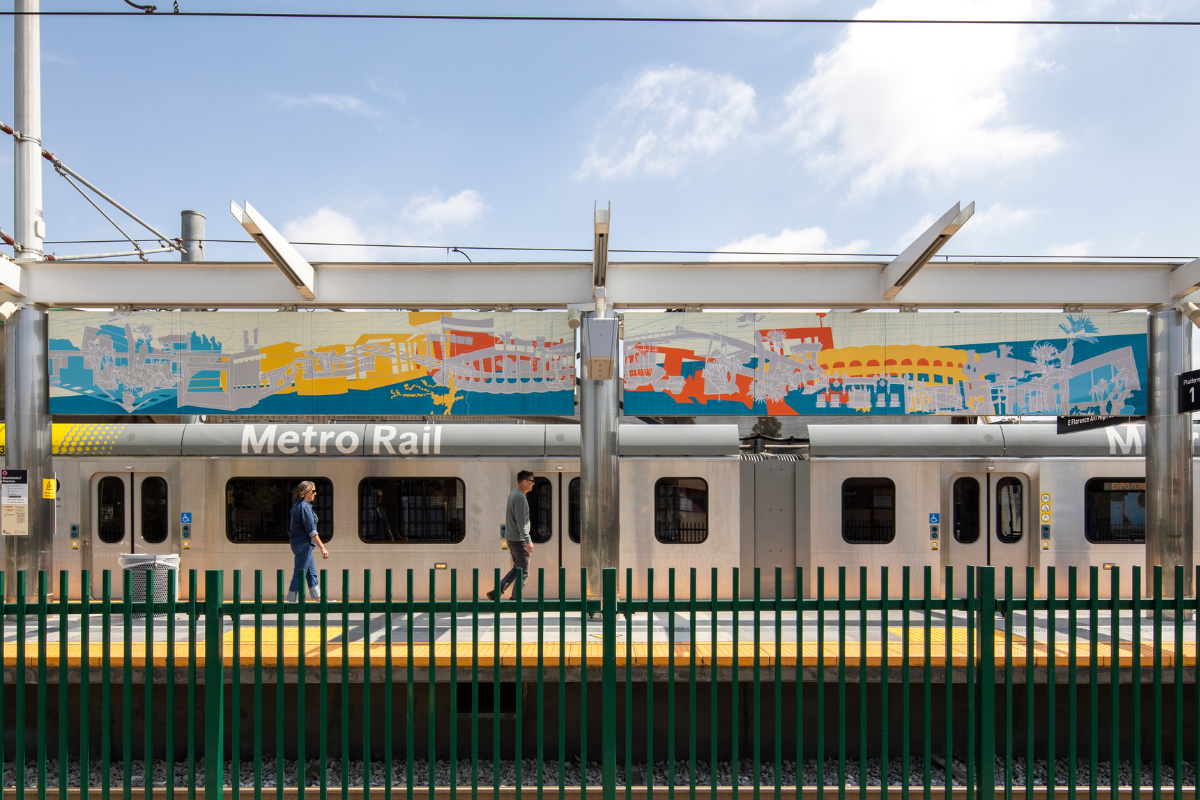
Kim Schoenstadt’s murals portray hybrid structures based on existing and historical buildings from the surrounding Inglewood neighborhood, including the Broadway Federal Bank, Centinela Adobe, Crozier Middle School, Jet Car Wash, Los Angeles International Airport Theme Building and Randy’s Donuts, to name a few.
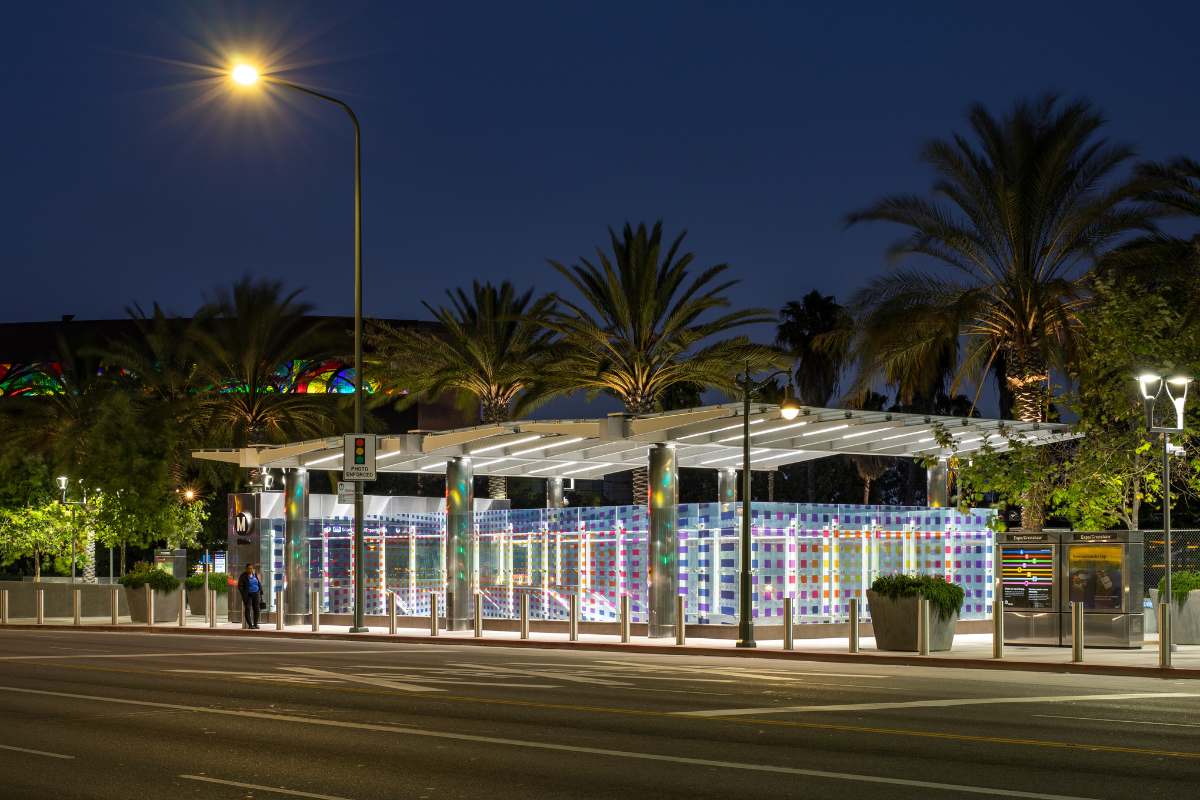
Erwin Redl’s dynamic artwork Inside Out – Outside In – Inside Out at the street-level entrance of Expo/Crenshaw Station takes advantage of the changing position of the sun to reflect an array of colors onto surrounding surfaces by day and transforms the glazed pavilion into an illuminated jewel box by night.

Jaime Scholnick’s frieze-like collages are based on hundreds of studies and more than 11,800 photographs of the surrounding neighborhood. Progressing from dawn to night, the artist spent many hours documenting the area around the station and talking to local residents about their visions for the artwork.
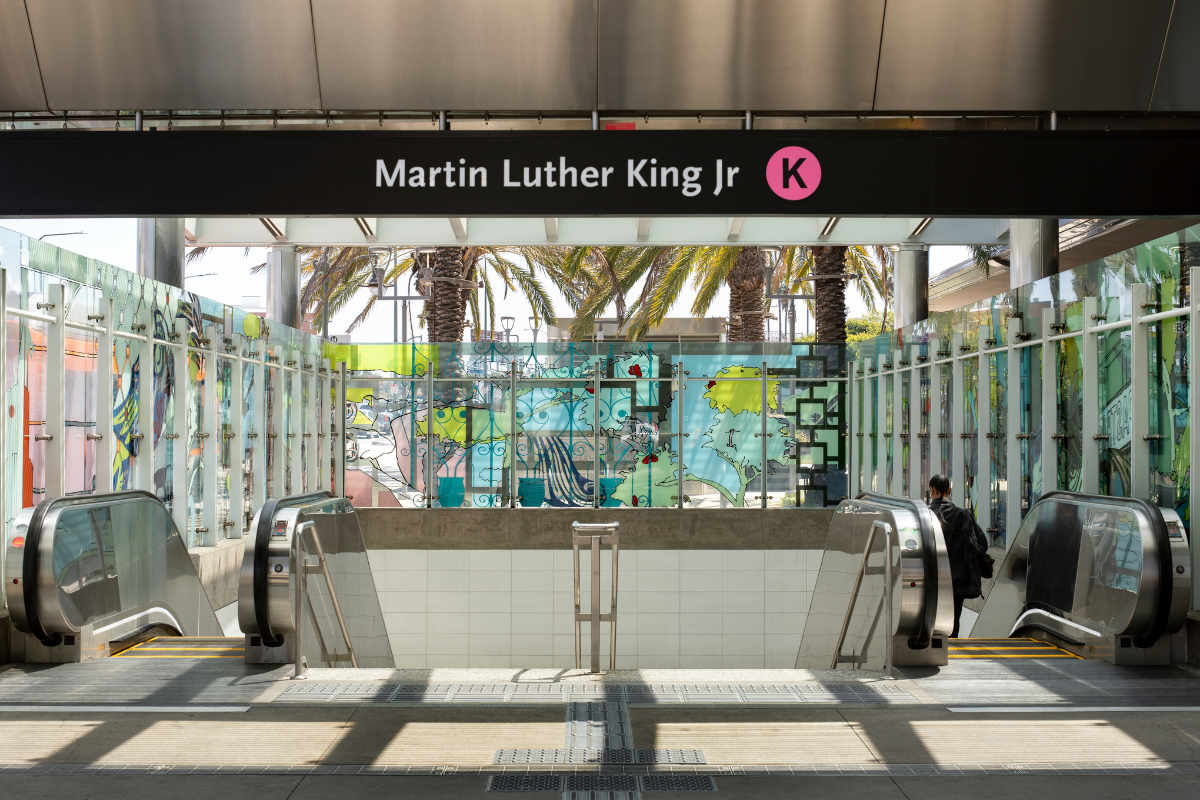
Mara Lonner’s artwork is inspired by the surrounding Leimert Park neighborhood, of which she was a long-time resident.
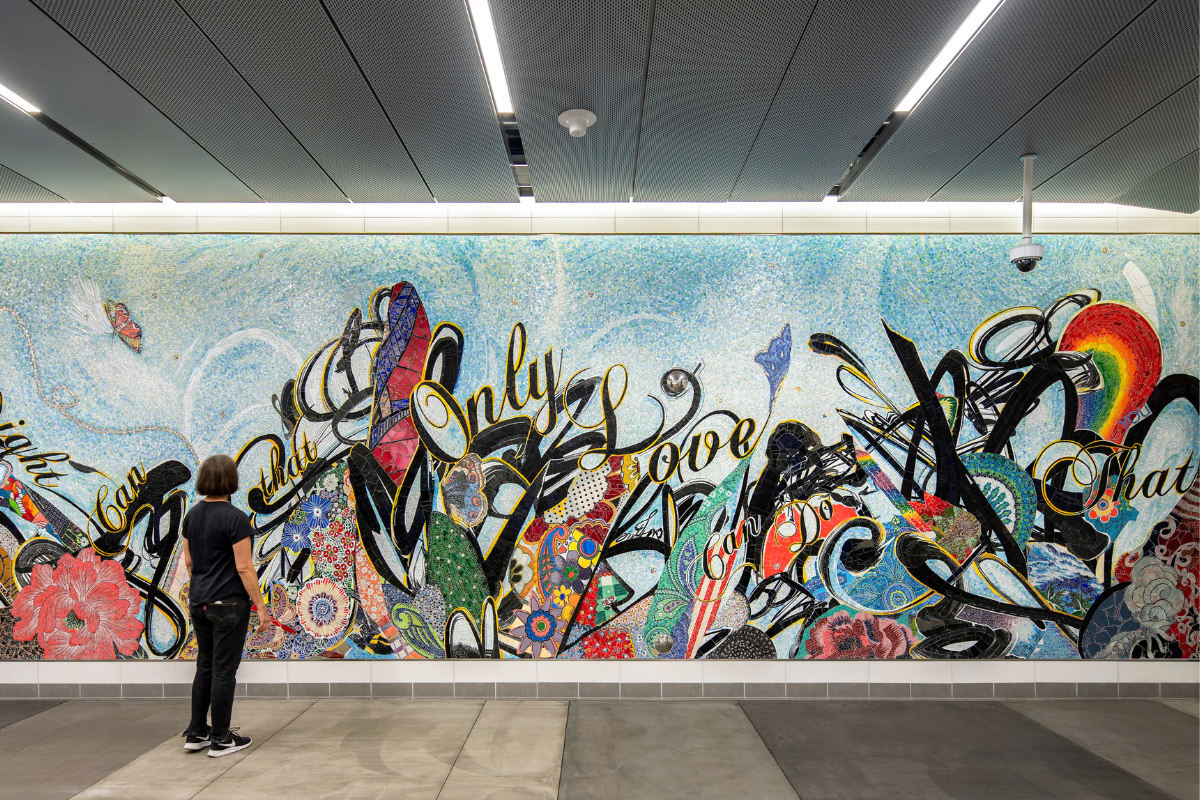
Shinique Smith’s mosaic mural playfully visualizes the cultural richness of South Los Angeles by collaging elements pulled from fashion, pop culture and calligraphy. Honoring the station’s namesake, the artwork also includes a selection of empowering words inspired by Dr. Martin Luther King Jr.’s speeches and autobiography.

Sherin Guirguis’s richly colored artworks reflect the countless individuals who have migrated to the area, many of whom have risen above tremendous obstacles.
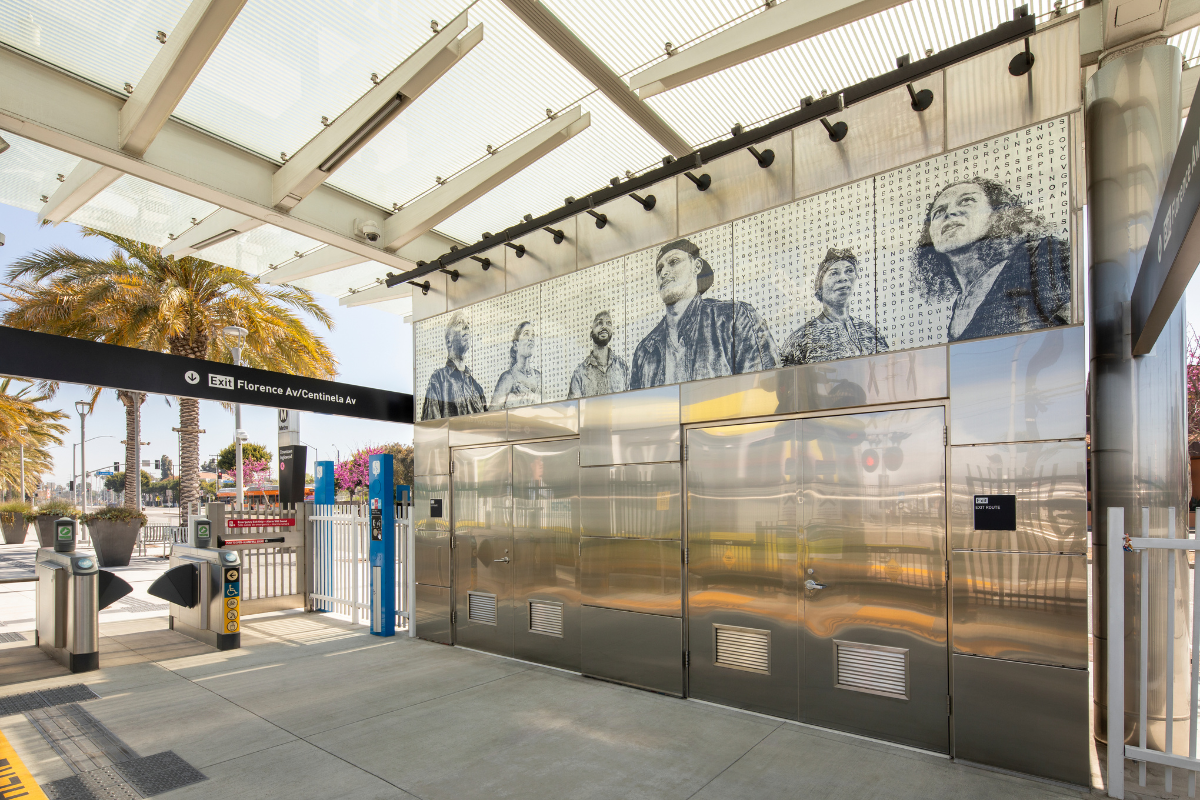
Kenturah Davis created Sonder with the aim to encourage connections between strangers, even temporarily while riding transit.
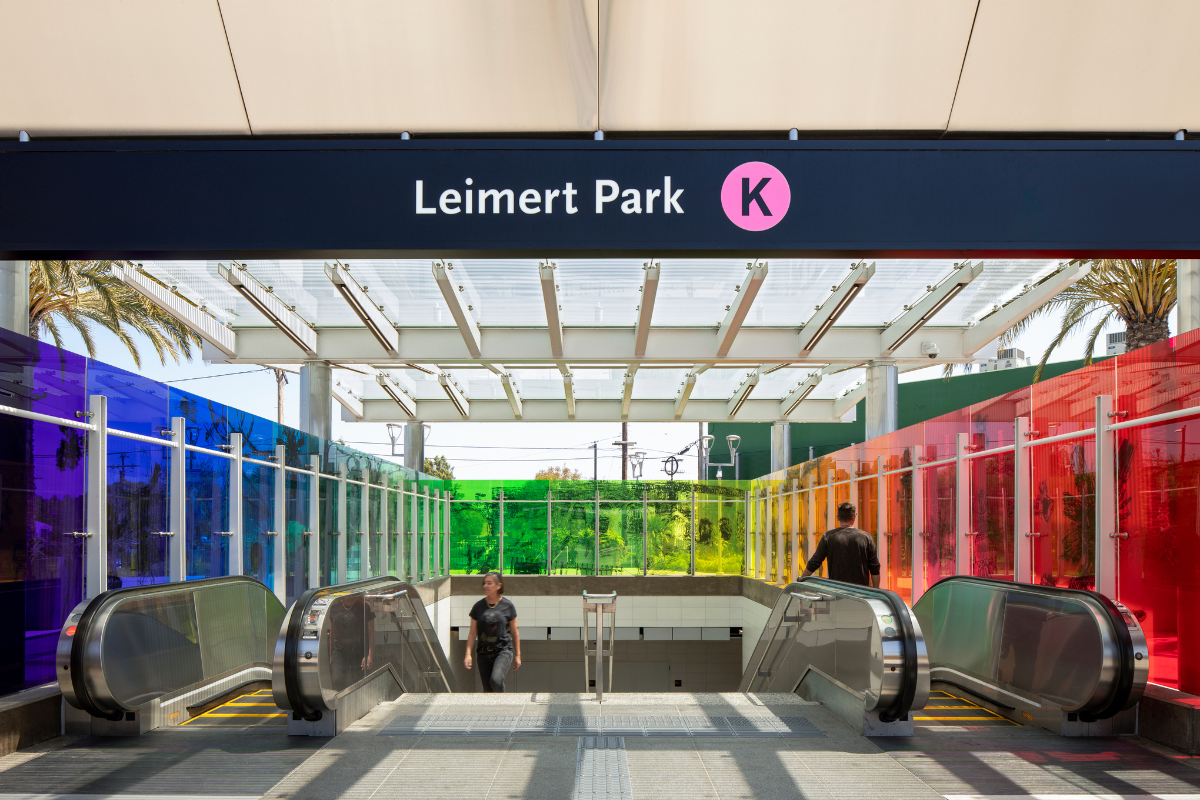
Ingrid Calame collaborated with youth through the RightWay Foundation to create rubbings of the physical environment—from furniture and instruments to architectural elements such as doorways and signs, all found in the neighborhood.
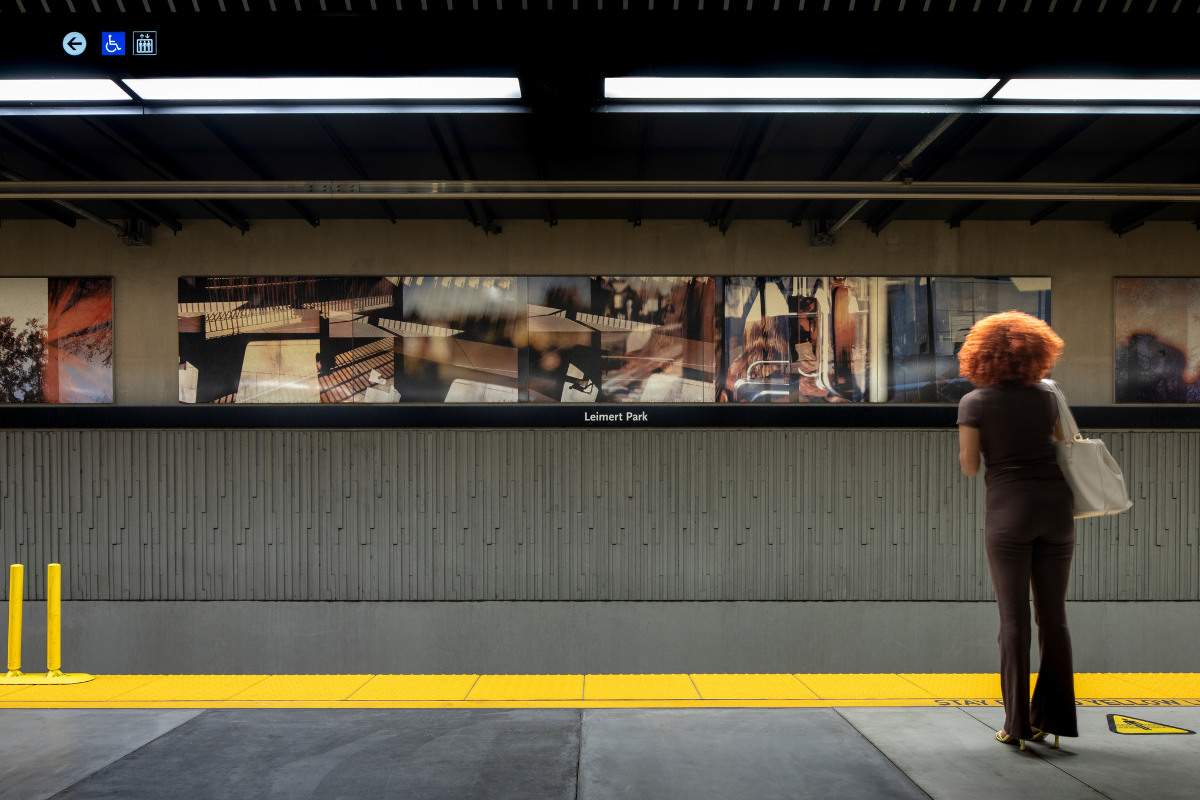
Dean Erdmann’s porcelain enamel art panels depict double-exposed photographs of natural elements in Leimert Park interspersed with images of the transit environment.

Mickalene Thomas’s mosaic was inspired by the quality of light, cultural and visual richness, and iconic structures in the surrounding Leimert Park neighborhood.
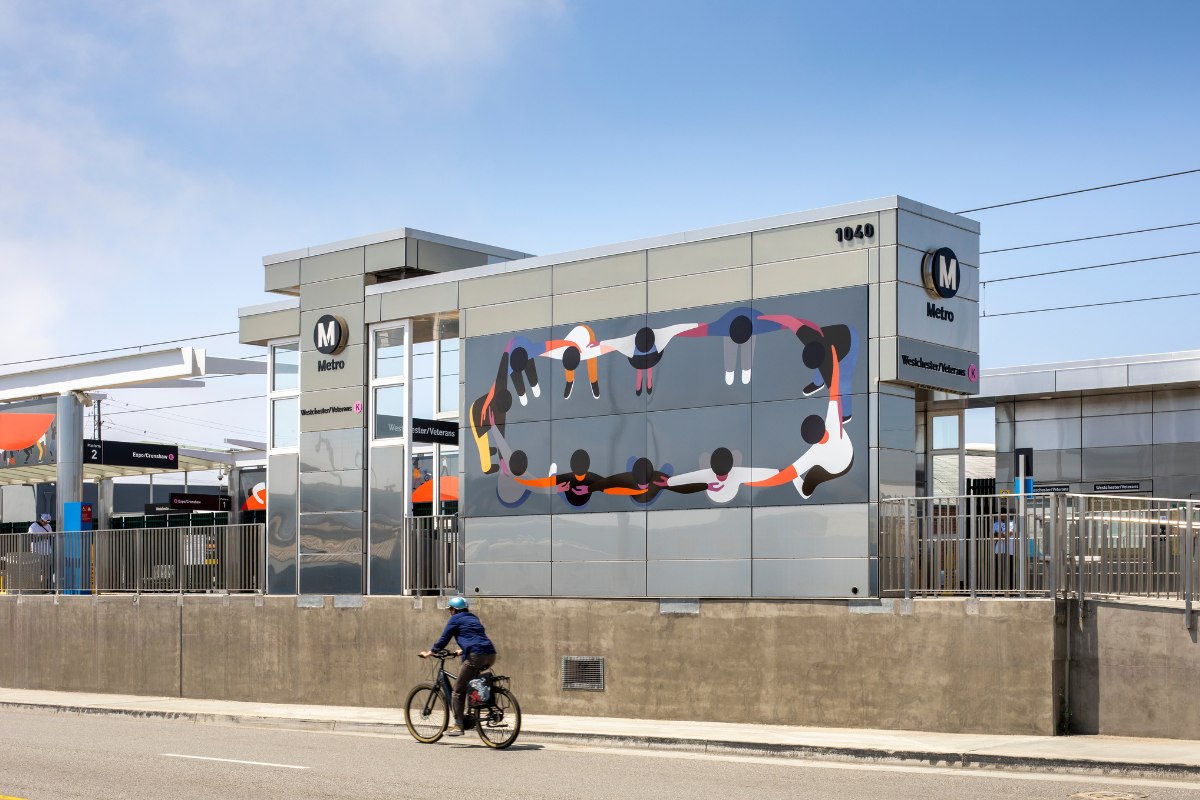
Rendered with bold, flat colors on a stark backdrop, Geoff McFetridge’s striking artworks depict communities of people interacting with large abstract shapes.

Eileen Cowin aims to spark the imaginations of transit riders through a poetic juxtaposition of photographic vignettes inspired by the potential stories of passersby.

Alhambra was the first city in California with an iron pipe irrigation system. The pipes frame the cultural icons and symbols of the city, including its founder, B.D. Wilson, and depict the community’s diversity, commerce and history.

Nature trails, train tracks, map fragments and names of local landmarks are nestled along sun-kissed mountain peaks and natural wonder that this independent, creative community in the foothills of the San Gabriel Mountains offers.

Azusa Avenue, also known as Highway 39, is a scenic boulevard that leads to the San Gabriel Mountains.

This cityscape celebrates a natural refuge known for expansive vistas, which draw native wildlife and people alike.

Artist Sevag Mahserejian draws inspiration from the unaltered natural landscapes of Canoga Park and their relationship to the built environment in In What was here once before, an artwork created for the Through the Eyes of Artists poster series on display in the fleet.

Danny Heller illustrates a Chatsworth landmark, Stoney Point, while celebrating the classic car and equestrian cultures indicative of this unique part of Los Angeles County.

Trevino has adapted the Monkey King character from Chinese folklore to symbolically bridge the gap between Chinatown’s traditions and its emerging pop culture.

Jessica Polzin McCoy’s watercolor depicts a college town that flourishes within the creative environment of the Claremont University Consortium, and opens an informal invitation to visit a backyard, ride a bike, step into a shady grove and attend school.

In her photograph, Yardas, Sandra de la Loza depicts moments of vibrancy in a land of contrasts, where heavy industry meets small residential enclaves.

Pinkney’s goal was to capture the energy and excitement of the City of Compton through local cultural icons (known and not so well-known) including: the Compton Airport, Compton Creek Horse Trail, Olympic Memorial Park, Martin Luther King Jr. Memorial and a skate park.

Downey’s unique vintage charm and post-World War II industrialization is captured through the combination of muted and vibrant colors, as the artist interposes historic landmarks with railroad crossings and power lines.

Warm highlights accentuate the principally blue, painted composition in which variously scaled figures stroll, dine, shop, and cycle among charmingly detailed architectural facades, signage, sidewalk planters, and street trees.